In China's Personal Care Market, Antiperspirant Spray Is an Awkward Category.
In China's personal care landscape, antiperspirant spray occupies an awkward position. On one side sits the Western market, where penetration rates exceed 60%. On the other, domestic consumers have harbored a lingering psychological resistance toward the very idea of "stopping sweat." This resistance isn't born of indifference—people do need freshness—but from an unwillingness to be reminded that they need it. The collective memory of traditional antiperspirants reads like a checklist of grievances: cheap metallic aluminum odor,white residue, pungent synthetic fragrance forcibly masking body odor, and the constant anxiety of staining dark clothing. These pain points act as an invisible threshold, shutting out vast swathes of potential users before they even enter the category.
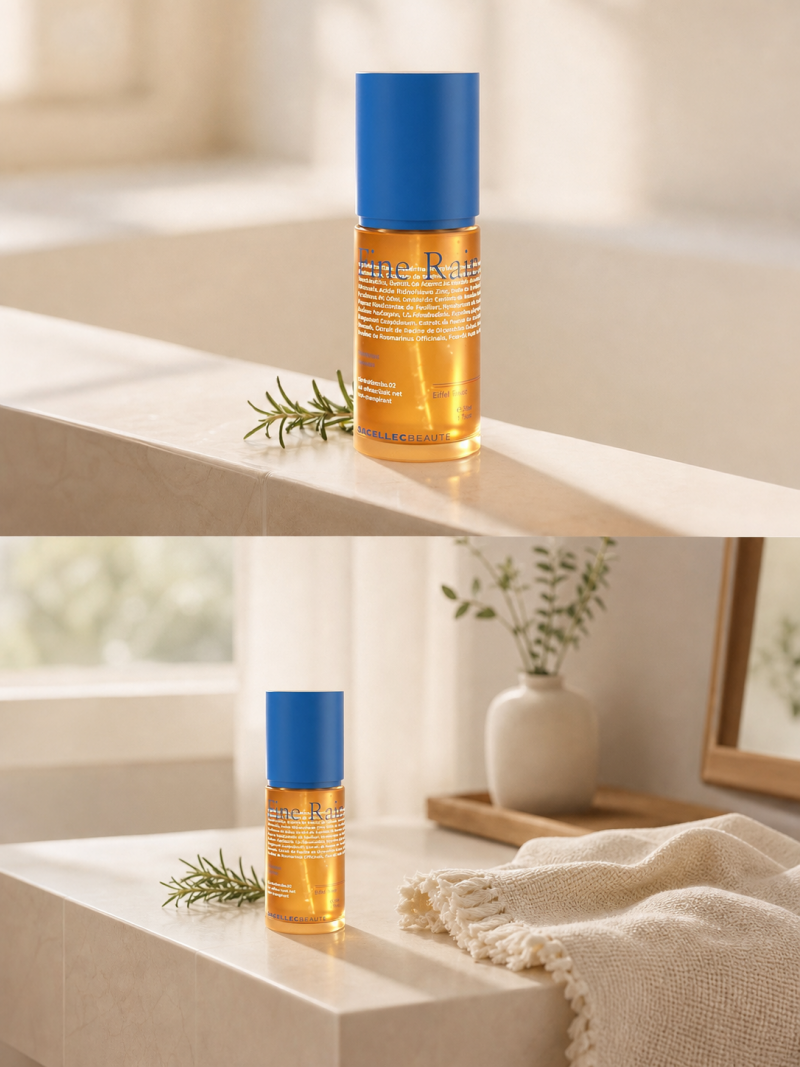
But has demand vanished? Hardly.
On social platforms, content tagged with "underarm darkening," "summer embarrassment," and "commute freshness" has surpassed 400,000 posts. In comment sections, recurring phrases include "I don't want those old-school antiperspirants that smell aggressively chemical" and "Is there something that doesn't feel so medicinal?" This signals that genuine consumer demand has always existed—it's just that existing supply fails to meet contemporary aesthetic and experiential expectations. While facial skincare has evolved into a granular discourse of "ingredient-savvy" and "formulation-literate" consumers, body care remains stuck in a rudimentary phase where "functional" is mistaken for "good enough."
From "odor masking" to "professional body care": The First Step in Category Upgrading.
Traditional antiperspirants operate on a crude binary logic: block + mask. Aluminum chlorohydrate plugs sweat gland ducts while overpowering fragrance drowns out malodor. This blunt-force approach sustained the category for two decades, but it also sealed its ceiling. Younger consumers reject being treated as if their bodies require correction. What they want isn't remediation—it's care.
SACELLEC BEAUTE's newly launched Deodorizing Freshness Spray lands precisely in this gap. Its formulation embodies this philosophical shift. Aluminum chlorohydrate remains the core antiperspirant active—the brand makes no attempt to sidestep this—because it is the only mechanism clinically proven to reduce perspiration. Omitting it would mean surrendering efficacy. But the supporting cast tells a different story. Zinc ricinoleate adsorbs odor molecules at the source. Zinc sulfate and piroctone olamine work synergistically to suppress bacterial proliferation. Lactobacillus ferment filtrate maintains underarm microbial equilibrium through a biomic ecosystem approach. The logic here isn't eradication—it's management.
What stands out further is the inclusion of skincare-grade actives. Glycerin, niacinamide, and sodium hyaluronate—alongside botanical extracts including centella asiatica, chamomile, licorice root, green tea, and rosemary leaf—are staples in facial moisturizer INCI lists. Seeing them in an antiperspirant formulation signals uncommon intent. Underarm skin endures frequent shaving and constant fabric friction, leaving its barrier function inherently compromised. Conventional antiperspirants prioritize sweat reduction while disregarding cutaneous health, often triggering dryness, hyperpigmentation, or even contact dermatitis with prolonged use. By transplanting facial skincare standards into a body care context, SACELLEC BEAUTE tacitly acknowledges a long-overlooked truth: the underarms are skin too, and deserve to be treated with the same rigor.
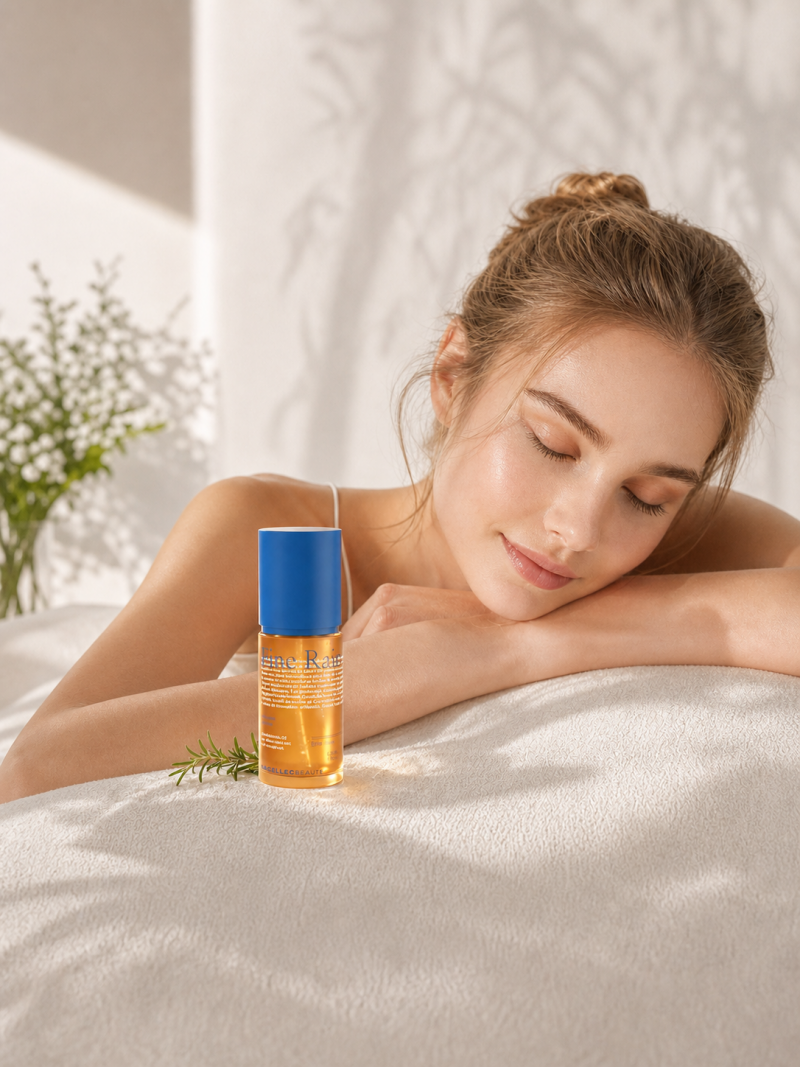
Sensory Experience: The Underestimated Purchase Driver.
Within the antiperspirant category, olfactive design has long been distorted by a "concealer mentality"—the stronger and more tenacious, the better, as if the user's natural scent must be completely obliterated to declare victory. But the olfactory palate of contemporary consumers has evolved. They don't want an underarm that smells like someone emptied half a perfume bottle onto it. They want an underarm that smells like nothing at all—except clean.
SACELLEC BEAUTE's fragrance strategy aligns with this nuanced psychology. The scent profile is crisp, airy, and unobtrusive, evoking the impression of neutral, natural body freshness rather than announcing itself as a functional product. This restraint carries tangible value across commuting, dating, and gym scenarios alike. No one wants a colleague leaning in during a meeting and catching a whiff of industrial-grade deodorant. Elegant invisibility, in itself, is a form of product competence.
Texture-wise, the fast-dry mist format resolves another latent friction point: white cast. Traditional sticks and roll-ons notoriously leave chalky streaks on dark fabrics, deterring users from reaching for them when wearing black shirts in summer. Aerosolized delivery paired with a rapid-evaporation base largely eliminates this concern, materially expanding wardrobe freedom.
Scenario-Led Thinking: From Problem-Solving to Lifestyle Integration.
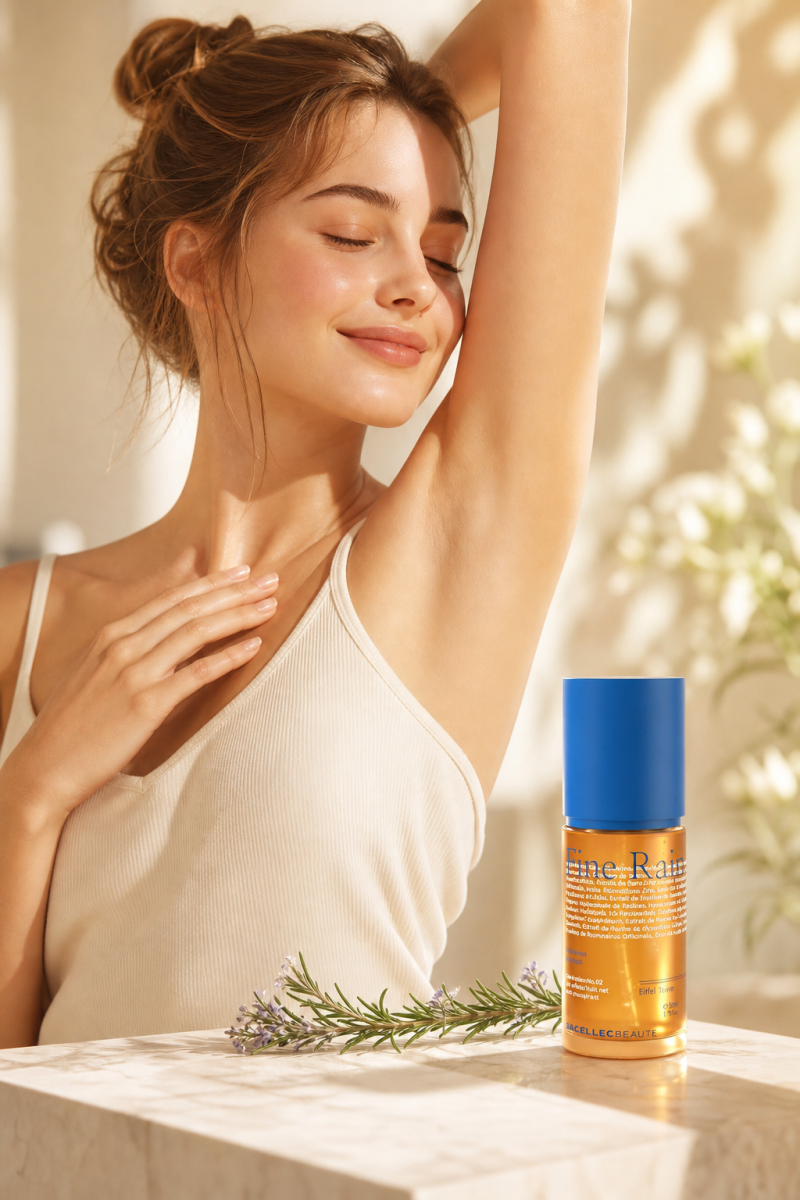
Examining how SACELLEC BEAUTE positions this product reveals a telling pattern: it rarely leads with "antiperspirant efficacy" as a standalone claim. Instead, the product is embedded within concrete lifestyle scenarios—morning commutes, office hours, workouts, travel, social engagements. The subtext is unmistakable: this isn't an emergency fix you remember to grab when you're about to face people. It's a daily companion you instinctively pack because it belongs in your routine.
This represents a fundamental rewiring of user mindset. The previous generation's mental model was reactive: I'm seeing people today, better spray. The emerging model is habitual: This is part of my post-shower regimen, like applying moisturizer. One is a problem-triggered stress response; the other is lifestyle inertia. SACELLEC BEAUTE is clearly betting on the latter.
Market Implications: Differentiation in a Saturated Landscape.
Viewed against the broader industry landscape, the personal care sector has entered a phase of stock competition, where growth stems from share capture rather than net-new demand expansion efforts—and body care is emerging as the next growth engine. Yet upgrading body care cannot simply replicate the facial skincare playbook. Body skin presents a fundamentally different substrate: larger surface area, greater tolerance thresholds, and consumers whose efficacy expectations are markedly more pragmatic.
SACELLEC BEAUTE's answer is a ternary framework: skincare-grade R&D standards + contextualized body scenarios + sensory aesthetics. Apply facial-formulation rigor to body products. Define usage cadence through authentic daily contexts rather than idealized regimens. Dissolve the utilitarian coldness of functional products via deliberate sensory design. This pathway will not suit every player, but for brands that have already cemented equity in facial care around pillars such as "botanical gentleness" and "long-termism," extending into body care represents a natural adjacency move.
The antiperspirant spray category has long suffered from a "category without champions" dynamic in the Chinese market. Consumers understand the need for freshness, yet struggle to name a brand they unequivocally trust. This stalemate is both a hurdle and an opening.
As Gen Z and Millennials solidify their position as the primary drivers of personal care spending, their purchase criteria have evolved beyond mere functional efficacy into a composite expectation: sensorial refinement, aesthetic appeal, and olfactory neutrality. Whoever first cracks this multidimensional value equation stands to fracture a category that has remained dormant for years.
On the surface, SACELLEC BEAUTE's spray trades in sweat control. But what it truly delivers is an unobtrusive dignity—the quiet assurance of being neither self-conscious nor socially intrusive. And that dignity is precisely what urban dwellers navigating crowded subway cars, windowless boardrooms, and locker-room mirrors lack most. | 